
PalClaw 2.0: AI for proactive hospital operations management
Building on version 1.0, the 2.0 release adds proactive interaction, specialised intelligence, closed-loop task execution, and continuous evolution. The new version is centred on the principle of ontology-driven, drill-down root-cause analysis along business objects, ensuring the agent remains firmly anchored to the operations ontology and consistently does the right things across business objects such as case groups, resources, and performance.
PalClaw 2.0: proactive, operations-aware, closed-loop, and continuously improvable.From PalClaw 1.0's "ability to execute tasks" to PalClaw 2.0's "ability to do the right things," the upgrade consolidates years of accumulated hospital operational management methodology into a governable, computable, and reusable operations ontology, enabling AI to evolve from "task execution" to"proactive improvement around hospital operational objectives."The first dimension is proactive interaction: it traces, supplements, and extends around operational objectives, turning a single query into a complete management improvement chain. The second is scenario alignment: it drills down into case groups, procedures, drugs, consumables, and indicators to identify root causes, aligned with real management scenarios. The third istask closed-loop,spanning problem decomposition, data retrieval, diagnosis formation, recommendation, and implementation tracking. The fourth iscontinuous evolution,where rules, experience, and feedback are channelled through governance and accumulated as in-hospital knowledge assets.
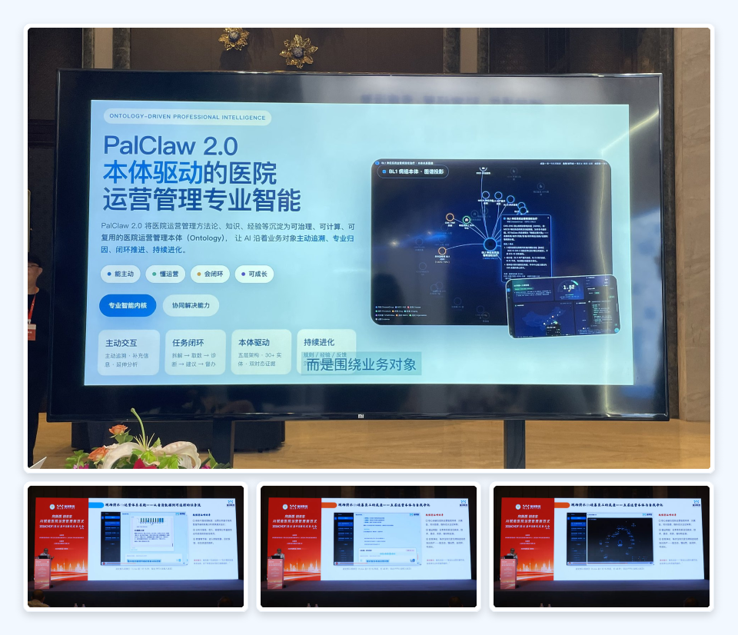
PalClaw is built on a composite architecture of "control hub + AI agent network + skills/tools registry + industry knowledge platform + security framework." Its semantic foundation incorporates over 350,000 knowledge graph nodes, benchmark baselines from hundreds of leading institutions, 25 categories of medical information entities, and the coordinated work of over 120 specialised agents, covering the core scenarios of hospital operations and supporting analysis from different management perspectives.

Public hospital operational management has clear policy foundations and internal logic. The Guidance on Strengthening Operational Management in Public Hospitals (Guoweicaiwu Fa [2020] No. 27) defines operational management as the aggregate of management activities covering the design, planning, organisation, implementation, control, and evaluation of internal hospital operations, centred on comprehensive budget management and business process management, and supported by total cost management and performance management as tools. The essence of operational activities is a complete mechanism for decision-making, execution, monitoring, and adjustment, whose value lies in forming an internal loop from objective setting to execution feedback.
Starting from the internal logic of operational management, objective setting is the entry point. At the policy level, hospitals are required to establish a decision analysis system and develop indicators focused on optimising resource allocation, strengthening financial management, and integrating business management with economic management. In practical terms, indicators must be developed across the four basic dimensions of service volume, cost level, quality and safety, and operational efficiency, combined with each department's case mix, resource allocation, and market positioning, to form differentiated indicator plans. These objectives should be tied to budget management and performance allocation so that the objectives themselves become the basis for subsequent resource allocation and performance evaluation.
The management structure forms the backbone of operational management. The hospital level is responsible for overall resource coordination and strategic direction, while the department level serves as the accountable entity for cost accounting and revenue management. Clear boundaries of authority and responsibility, along with effective transmission mechanisms, are established between the two levels. On this basis, management is further extended to the disease-specific level, where dedicated management plans are established for priority case types, breaking down departmental silos and integrating cross-specialty resources around specific diseases to achieve integrated coordination of clinical care and operations.
Information system development is a prerequisite for supporting precision management. An integrated operational management information platform centred on business–finance integration should be established, with strengthened application of modern information technologies including AI, big data, and cloud computing. Building on this foundation, management modelling and data analysis are used to convert raw data into management information, which is embedded into hospital-, department-, and disease-level management scenarios to enable dynamic monitoring of key indicators and early warning of anomalies, providing continuous data support for operational decision-making.

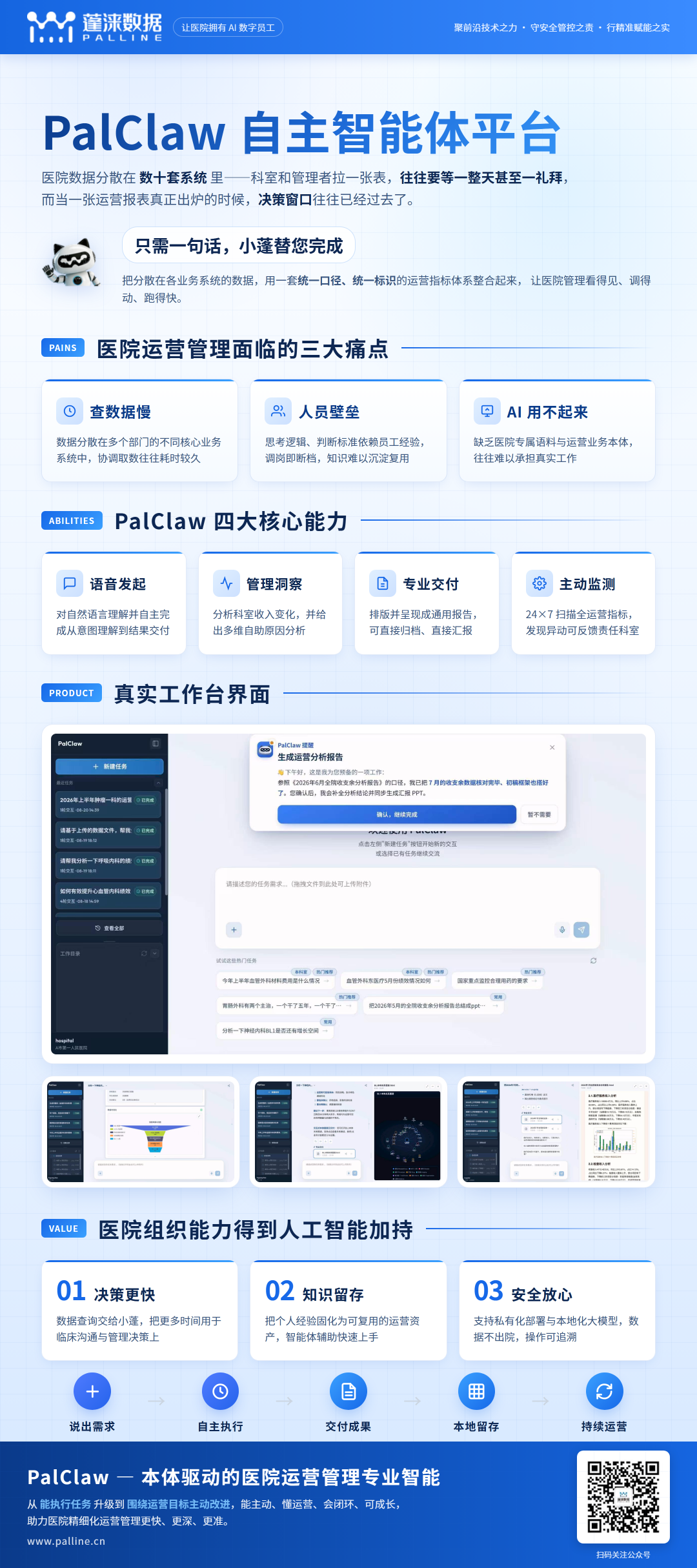
Direction
Operational analysis shifting from the whole hospital to the case group
Under DRG/DIP payment reform, total hospital revenue and expenditure need to be further decomposed into each ADRG case group to investigate where surplus or deficit differences and structural issues may arise across different case groups. Within the same specialty, resource consumption logic can vary significantly between case groups. Department heads therefore need to give in-depth consideration when making resource allocation decisions (operating theatre slots, beds, nursing staffing, and consumable management) anddesigning operational strategies.For example,FM3 (percutaneous coronary stent implantation) and FL2 (percutaneous cardiac ablation with atrial fibrillation and/or atrial flutter)both fall under cardiovascular care, yet their cost structures differ in average cost per case, drug-to-consumable ratio, and CMI. Some require focused attention on volume-based procurement implementation and standardised use, while others require attention to procedure optimisation and precision management. Operational analysis must rely ondeep industry expertise and accumulated knowledgeto answer questions such asthe profitability of case groups, volume–price structure, the causes of variance, and how to design improvement plans.Therefore, "the ontology task determines what the agent should calculate and how," which requires the boundaries and definitions of knowledge to be gradually clarified, so that exploration, historical comparison, and benchmark comparison can be carried out effectively.
In the case demonstration, the example scenario applies thefactor analysis methodto break down volume and price changes step by step, drilling down to specific departments and specific case groups. Revenue declined in the current period, with the CMI drop contributing72%,pointing to "the case mix is shifting toward less resource-intensive case types"This conclusion, rather than simply attributing it to workload fluctuations; in another round of optimisation, the hospital pulled the surplus rate of certain case groups from-5.2% back to +3.8%"—not by tightening targets, but by first pinpointing which case group and which process step the problem lay in.
Capability
Distilling actionable management insight from data
Hospital operations management roles require staff with backgrounds in finance, auditing, pricing, health insurance, information technology, engineering and related fields, combined with an understanding of clinical and nursing operations—truly multi-disciplinary talent. At the hospital level, responsibilities centre on resource coordination and strategic oversight, while at the department level, staff act as the primary owners of cost accounting and revenue management.
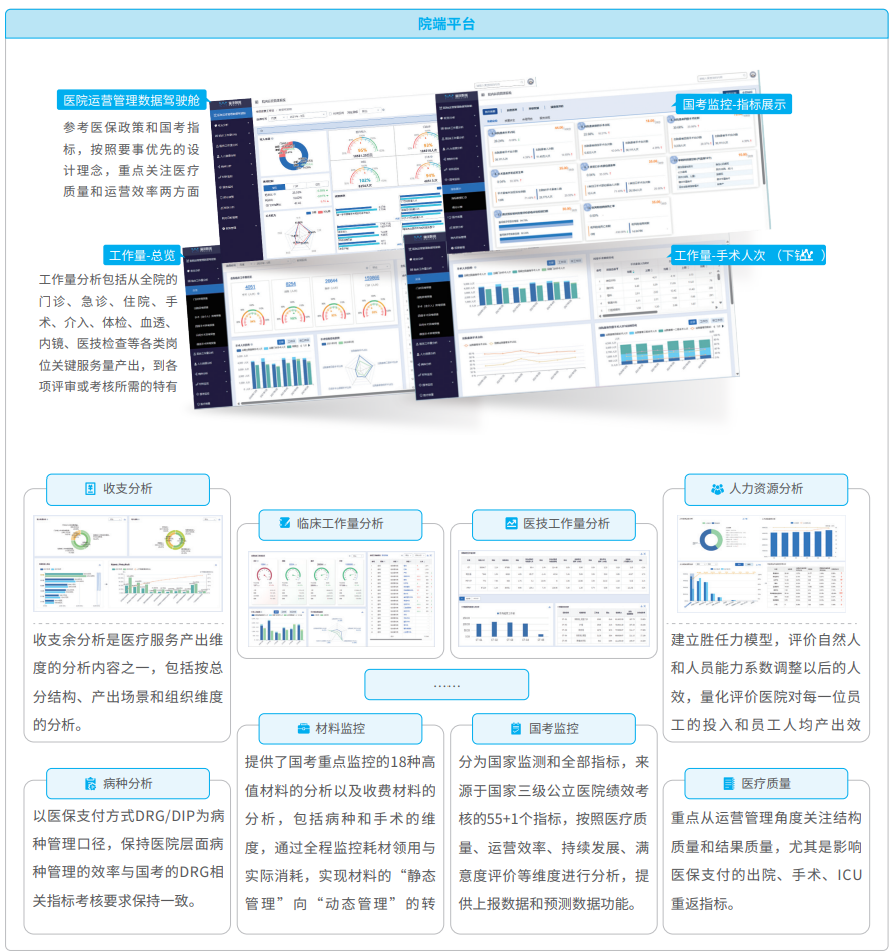
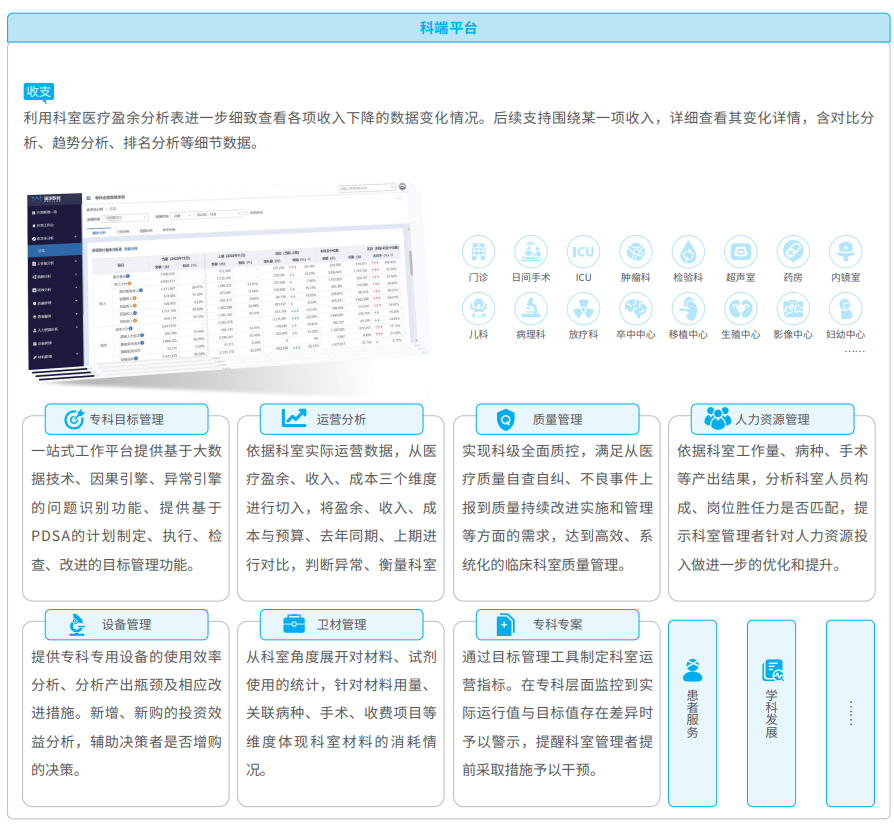
Talent in this area is scarce and cannot be developed quickly through traditional training alone. The more common approach is to use technology as an aid—embedding established analytical methods and experience into tools to perform structured analysis, root-cause attribution and improvement, so that the system takes on part of the day-to-day workload. PalClaw 1.0 focuses ontask-driven execution, autonomous delivery, professional output and secure deployment"—addressing the question of "being able to do the work". Version 2.0 builds on this withproactive interaction, professional intelligence, closed-loop task completion and continuous evolution". The direction of the new release centres on "ontology-driven analysis, drilling into root causes along business objects". The agent is firmly anchored to the operations ontology, doing the right thing around business objects such as case groups, resources and performance.
Method
Moving from experience-based practice to a system-based approach
Faced with complex operations management requirements, PalClaw 2.0 establishes a professional analytical pathway along the hospital operations management ontology. Starting from core business objects, it automatically recalls the relevant diseases, diagnostic and treatment techniques, clinical pathways, resource capabilities, quality indicators, operations indicators and supporting evidence, forming an explainable network of business relationships. On this basis, it further identifies the indicator definitions required for analysis, clarifies statistical scope and applicable boundaries, benchmarks against internal data and industry references, pinpoints gaps, and attributes bottlenecks along process, resource, quality and coordination dimensions.
PalClaw 2.0 delivers professional decision support comprising key evidence, risk alerts, improvement levers and action recommendations, enabling hospital managers to see clearly where each conclusion comes from, where the issue is stuck, and how to move forward next—making management decisions more evidence-based and traceable.
At the infrastructure level, it uses the proprietary HealthAgent Mesh (HAM) micro-agent network" and applies Agent Harness for runtime governance. The procedural documents and standard operating instructions originally written for human staff are encapsulated with prompt engineering and Skills into PalClaw's operational workflows (SOPs), converting "operations methodology" into executable processes. Final judgement remains with professional staff, but the definition of the ontology and the codification of methodology determine the direction the agent maintains while running.
PalClaw 2.0: ontology-driven, semantically aligned, deeply insightful.
PalClaw · Professional intelligence for hospital operations management | Learning exchange