From Data to Insight: Capturing Hidden Relationships in Vast Volumes of Information
Operational management implementation goes beyond tools; it is a systematic management methodology. The core value of management software lies in the management methodology or philosophy it embodies.

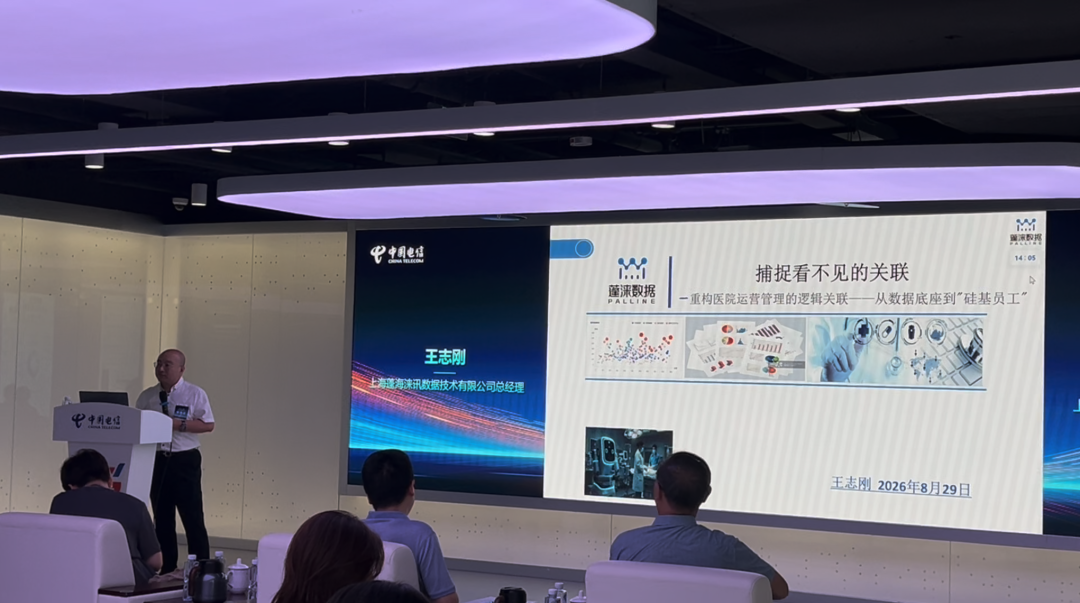
On the afternoon of Saturday, 29 August, the "Healthcare Data Governance Methodology and Practice — 2026 HIT Expert Network Engineer Forum", hosted by the Information Technology Application Innovation Working Committee of the Beijing Informatization Association and HIT Expert Network, was successfully held in Beijing. Wang Zhigang, founder and general manager of Palline, delivered a keynote speech titled "From Data to Insight: Capturing Hidden Connections in Massive Information"."Healthcare Data Governance Methodology and Practice — 2026 HIT Expert Network Engineer Forum"Wang Zhigang, founder and general manager of Palline, delivered a keynote speech titled "From Data to Insight: Capturing Hidden Connections in Massive Information".
The forum focused on the concepts, challenges, and practical implementation of hospital data governance, and discussed hot topics such as data planning, AI applications, and the construction of high-quality data sets during the localisation process in hospitals. It brought together heads of medical institution informatisation, information department and data centre managers, engineers, and representatives of medical informatisation enterprises to discuss the present and future of healthcare data governance.
Data governance lays the foundation as the operations management AI agent workforce takes centre stage.
Operations management must adhere to the principles of "prioritising what matters, foreseeing exceptions, and assisting execution", judge resource allocation based on outputs, provide the AI agent workforce with understandable business knowledge, and free up space for new quality productive forces. Drawing on experience in hospital management, ensuring data quality requires not only technology, but also institutional design. For example, during performance management, data completeness, accuracy, and timeliness are critical. When frontline departments are motivated to review and correct data proactively, the results are remarkable — "those who generate the data are responsible for governing it; those who use the data participate in its governance".
To enable the value of data to be realised, the most pressing gap at present is "the insufficiency of the business metadata layer". Tagging can be considered on the basis of clinical codes such as ICD to form domain metadata. For example, in the allocation of DSA equipment resources, a queuing model is established through ICD-coded correlation analysis to calculate the upper limit of services that a single machine must handle within one hour, with the remaining idle periods used to schedule elective peripheral vascular surgery, thereby achieving optimal resource allocation.
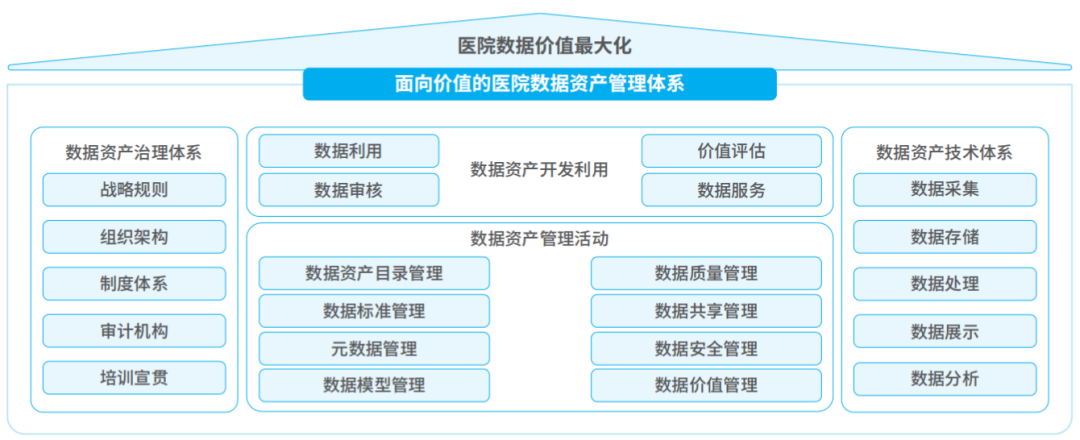
"The implementation of operations management is not merely a tool, but a systematic management methodology. The core value of management software lies in the management methodology or philosophy it embodies." Hospital operations management must be fundamentally driven by atomic-level medical service data. What matters most about data is whether it is used in core business scenarios and directly affects the interests of its users.
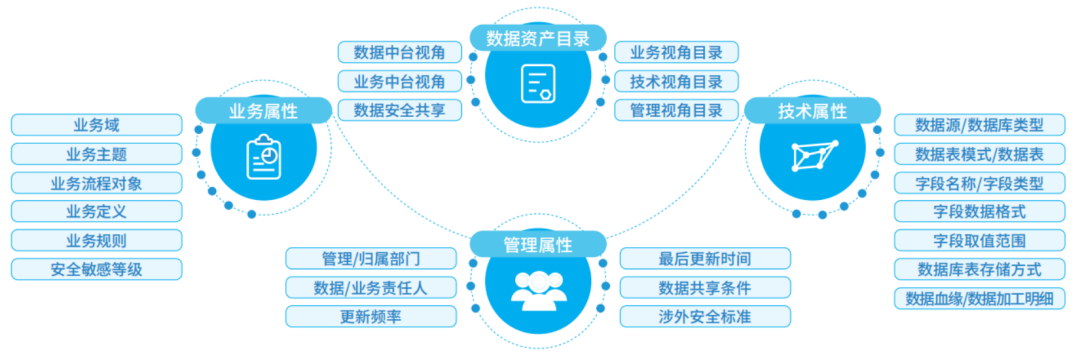
In the construction of an operations data centre, data tagging serves as a foundational exercise. Through in-depth tagging of atomic-level data from business systems, data sources from business systems are transferred to the DL or ODS layer. The tagged information is then further integrated into the DW layer to provide quantified data support for operations management.
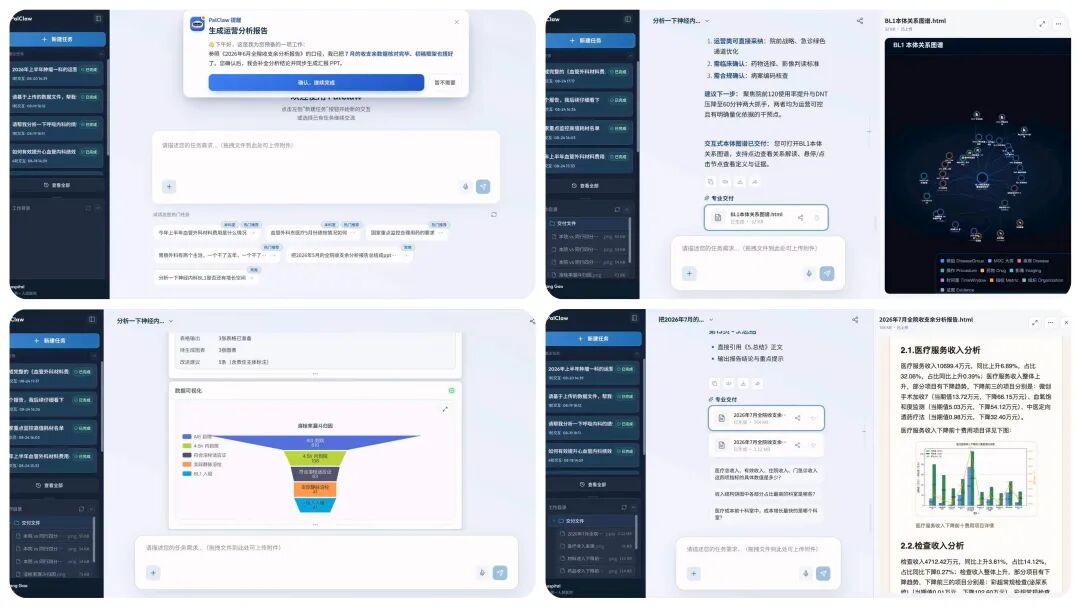
PalClaw 2.0 — Ontology-Driven Operations Management AI Agent Workforce for Hospitals
PalClaw 2.0 establishes professional analytical pathways along the hospital operations management ontology. Starting from core business objects, it automatically traces the related diseases, diagnostic and treatment techniques, clinical pathways, resource capabilities, quality indicators, operational indicators, and evidence sources, forming an interpretable network of business relationships.
On this basis, it further identifies the indicator definitions required for analysis, clarifies the statistical scope and applicable boundaries, benchmarks internal data against industry standards to locate gaps, and conducts bottleneck attribution along the dimensions of process, resources, quality, and coordination.
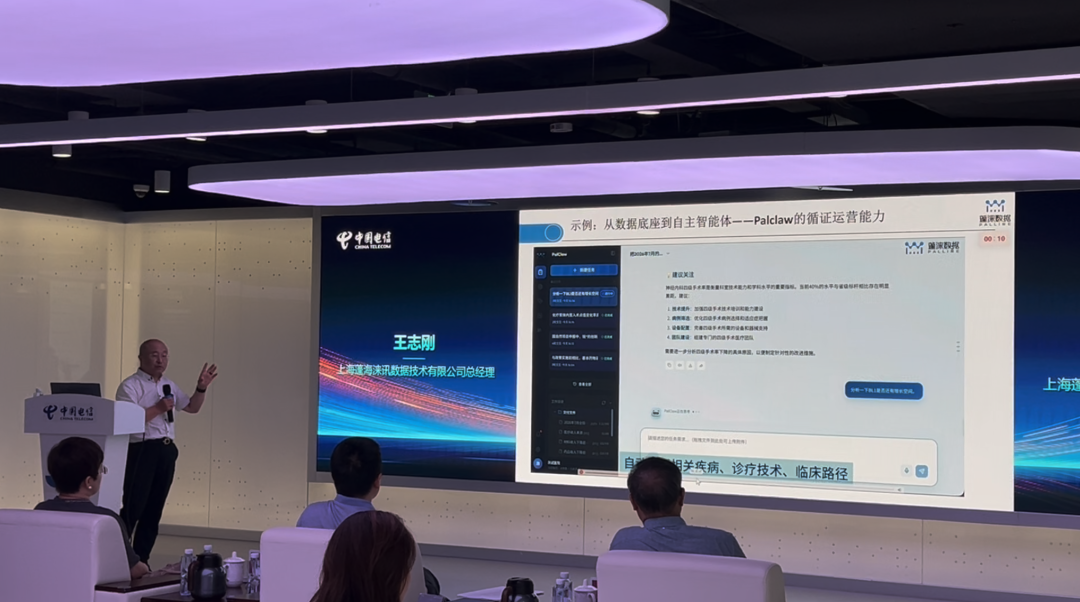
PalClaw
PalClaw 2.0 delivers professional decision support comprising key evidence, risk alerts, improvement levers, and action recommendations, enabling hospital managers to clearly see where conclusions come from, where problems lie, and how to proceed next, making management decisions more evidence-based and traceable.